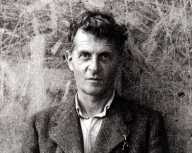
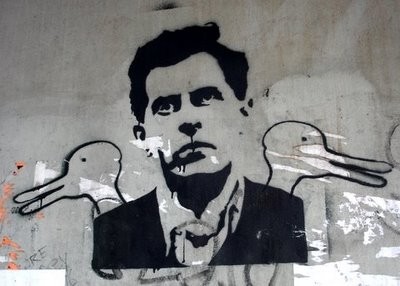
 Ludwig Wittgenstein (1889 – 1951) is my favorite of the latest, greatest philosophers, and I learned his work from Hans Sluga and Barry Stroud at Berkeley, who taught me that Wittgenstein’s later thought experiments can lead to much more than he or we have worked out about truth and meaning. Wittgenstein’s thinking can answer many questions about thinking, not completely but more fruitfully, as Wittgenstein says, than other thinkers can.
 The turn between Wittgenstein’s earlier and later thought is much like the Indian metaphor of turtles supporting the world and the question that arises from such an arrangement. Locke, Hume, Russell and other European philosophers have brought up the Indian debate about what the world sits on such that it is stable and continues. Some say that it sits on a turtle, an animal that symbolizes the cosmos in India and China, as it is flat on the bottom like the earth, and round on the top like the sky. Others ask what the turtle sits on if the world sits on it, and someone once said it’s turtles all the way down. Some have called this an infinite regress, an endless series that vanishes over the horizon, Buddha called it an unsolvable problem, Plato called it the greatest difficulty for philosophy, and today some call it the foundationalism debate, arguing whether or not knowledge or certainty sit on anything known or certain.
 Philosophy is the love and study of wisdom, truth, meaning and thought. Thought interweaves several elements in our world. We sense, see, hear, touch, smell and taste things in our world. We also feel, feeling good, bad, tense and calm about the things we sense. We also remember, sense and feel things that are not in our world, but were. We also reason, building what we remember from sense and feeling into thoughts. In the middle of all this are words, things we hear and see from others that are interwoven with what we sense, feel, remember, and think.
 Is sensing a thing without words, feelings or memories a thought? Is looking at an apple thinking? Is looking at it and feeling a feeling thinking? If I look at an apple and feel happy, is that a thought without words or images in mind? Some say yes, and others say no. Once we have several things interwoven, including the words we use to mean things, many call that thought. Some say thought is logical and rational, such that it follows rules, or follows rules when it is right and correct in judgement. Others say that this is the turtle problem yet again.
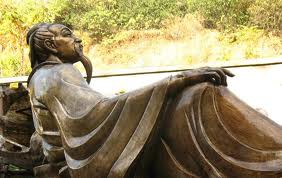
 If things need thoughts to make sense of them, and if thoughts need thoughts, such as rules, or plans to make sense of them, is there thought that makes logical, self-aware, rational sense of thought itself? Are there words that make sense out of how we use words to mean things and know things? Some say yes, and it terminates in the rules and forms of logic, and others say no, and we simply continue to gather and divide things without an underlying logic that brings all of our wants and plans into common, coherent systems, visions or words. As Zhuangzi the Daoist asks, What do our ways or words rely on such that our words mean things?
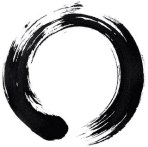 What do turtles sit on? Some say other turtles. The Buddha in India and Wittgenstein in Britain answered the question with similar, simple metaphors that show us more than any system or logic in images or words can completely in itself. Thought and our world are interwoven, such that it isn’t turtles all the way down, but turtles all the way around. Much as Nicholas of Cusa and Hegel said about a circle, it is an infinite regress, but it is also complete in itself, and continues right in front of us. It isn’t that truth or rules rely or rest on any specific thing, but rather situations of sense, feeling, memory, reason and words mean things all together.
 Situations shift, and these shifts show us how things mean things to us better than any specific words can. As Wittgenstein said, there is what can be said, but what can be said is only a part of what can be shown, which is best done not with complete, enclosed systems of words or images but by leading people through many open-ended situations of mind, stagings of thought, what Wittgenstein called thought experiments that involve many and any elements.
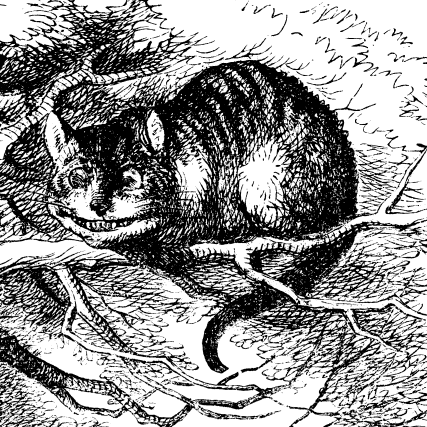
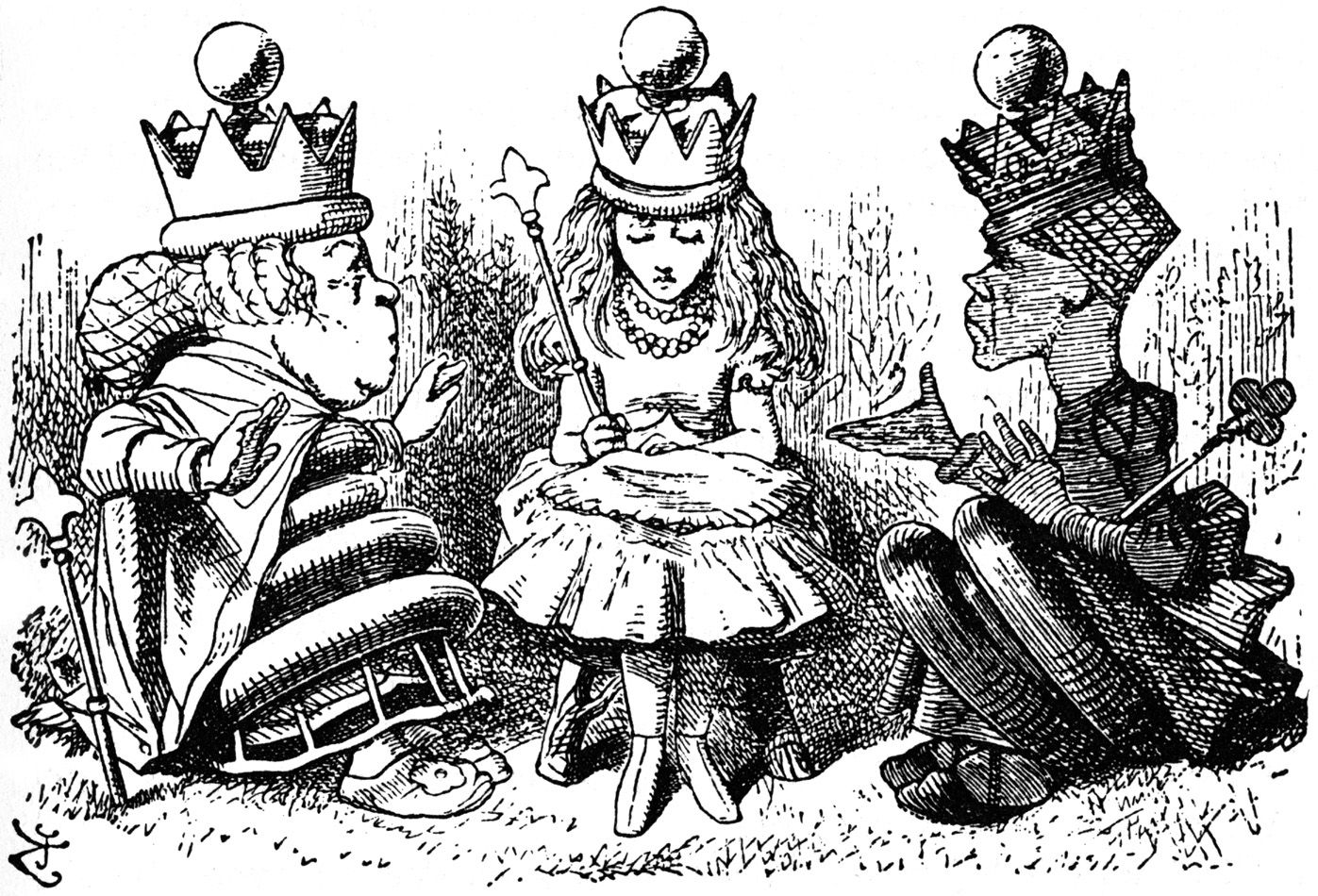
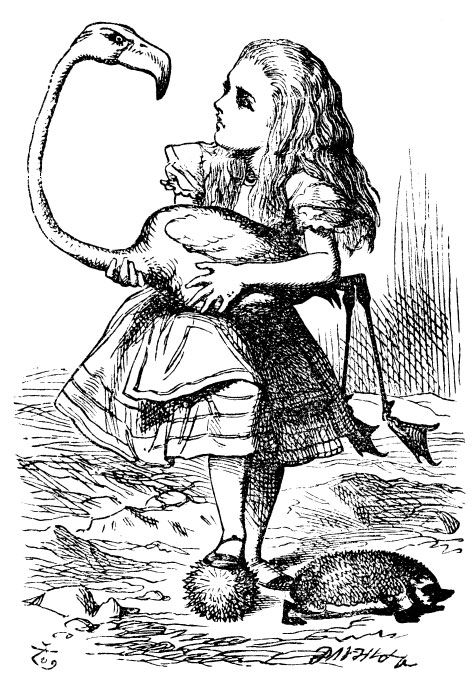
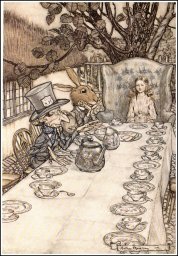 Much as Alice is frustrated with her sister’s text without pictures in the opening of Wonderland, words and rules without many interrelated examples of rich situations and the infinite variety found in them confuse us and lead us into considering words outside of actual, useful meaning. Carroll wrestled with Boole’s algebra much as Wittgenstein wrestled with Frege’s logic, and both came to the conclusion that words and systems can trap us like a fly in a bottle.
 As Zhuangzi said, once we have the rabbit, we can forget the trap, and then we can involve the trap or not as we like, such that we can have words with others who have forgotten words, remembering and forgetting words and understandings freely as we please rather than sitting on particular words or systems as final, fixed foundations. Wittgenstein enjoyed reading Alice’s adventures to two sisters in Wales where he worked on his final thoughts, and he likely heard and felt Carroll’s deeper meaning, that it is good to use thought, rules and logic to show others how open-ended thought can be, beyond anyone’s particular logic, words, thought or feelings.
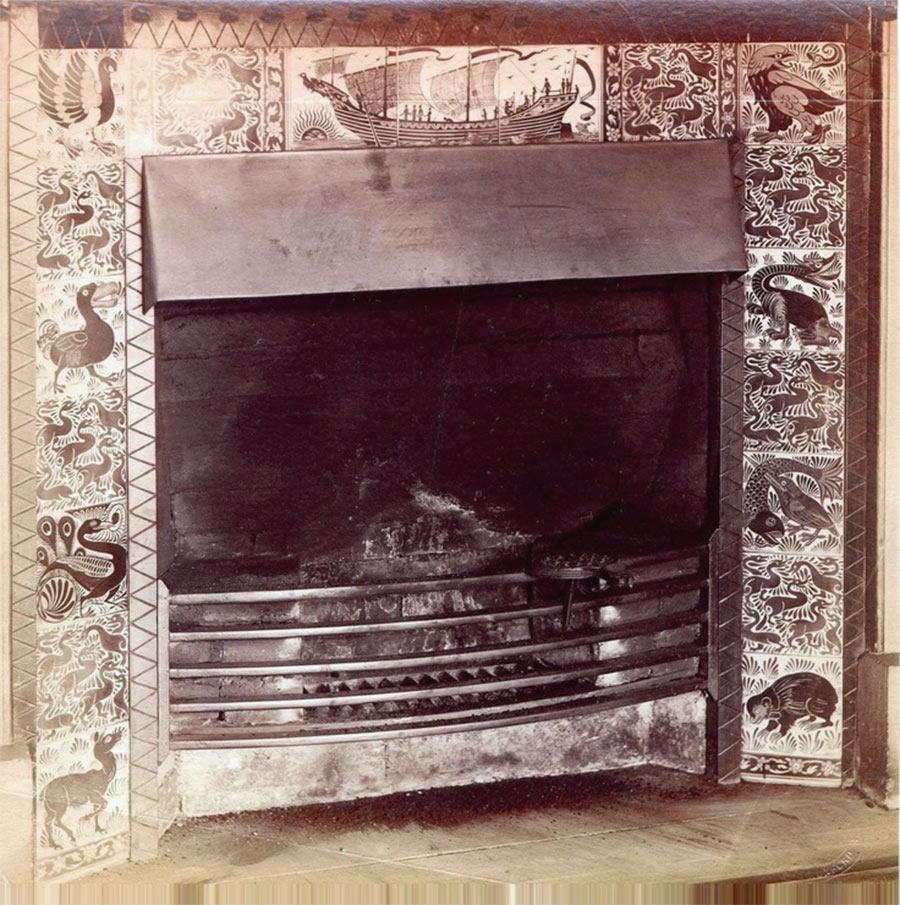
 Buddha called the interweaving of everything codependent-arising, life as a tangle of many forms of life, as we see in Klimt’s painting Death and Life, which he began in Vienna 1908 and finished in 1915, the time Wittgenstein left Vienna to study logic, mathematics and philosophy with Russell at Cambridge. Klimt was not only one of the most influential painters of Wittgenstein’s Vienna, he painted a portrait of Wittgenstein’s sister, who was also psycho-analyzed by Sigmund Freud. As we might suspect, Wittgenstein’s family had some pull in Vienna, which in Klimt’s day was the city with the latest, greatest culture, replaced in the 1920s by Paris, the 40s by New York and the 60s by San Francisco. Wittgenstein said that life and thought are like an old city, with many forms of life inter-tangled for centuries.
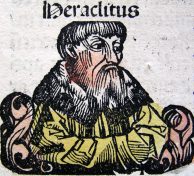 Much as Buddha taught there is no essence or nature that completely defines or causes a thing because it arises out of the relationships it shares with other things outside of itself, Wittgenstein argued that life is like a thread without a single strand running through the entire length, and so we should always beware of the lure of the secret cellar, the proud idea that we have hit bedrock and completely revealed the truth rather than revealed yet another strong connection between different interwoven things. The cure for this proud ignorance, what Heraclitus called the human disease, is a rich variety of interwoven examples and elements that continue to show us more and more about the greater whole, endlessly.


 With this structure alone, we can exhaust all the connectives we use in formal Sentential Logic the way Wittgenstein envisioned it in his Tractatus and set it with truth tables. First, AND puts pieces on the board, including them together, but it could also, in combination with NOT, take sets of pieces off the board, adding them to the possibilities currently false rather than those currently true. NOT takes pieces off the board, or adds them if it is tied up with other NOTs. OR considers pieces, involved with whether or not pieces are moved on or off the board, completely indeterminate by itself, but determinate in combination with pieces added to or dropped from the board with ANDs and NOTs.
 IF-THEN connects pieces possibly on the board together, such that one should lead to the other. Sluga argues that there are connections between things in the moment, such as speciation, with all men being mortal all at once or always, and connections between things over time, such as causation, with one thing leading to another. If the game changes with the possibilities over time, the first would be statements about the relationships between pieces at the same time, and the second different times. Bivalence, IF-AND-ONLY-IF, would simply state the relationship is reciprocal, working both ways, which would work with speciation and causation in a chicken-and-egg situation, where two things lead to each other circularly over time, again and again.















 Thought Itself