 Lewis Carroll’s Wonderland and Through the Looking Glass are many things to many people, and they serve well as a series of amusements for children and allegories for adults, but they also serve as memorable illustrations of the basic lessons of Aristotle’s logic and ethics, as a set of absurd characters that children can remember and adults can enjoy that verbally and visually display playful engagement with serious lessons and forms, including both ancient Aristotelian and modern Boolean forms of logic that Carroll, mathematics professor and logician, knew well. Carroll owned and wrestled with the work of Aristotle, Boole, De Morgan and others as a logician in the years before and after telling Alice and her sisters his stories, and he developed a system for visually teaching forms of logic in the years after publishing his books about Alice.
If Carroll included forms of ancient and modern logic in his books about Alice, then he possibly used Aristotle’s ten categories, which Carroll knew well from the first book of Aristotle’s works on logic, to order the events and characters of Wonderland and the Looking Glass, in the order Aristotle himself listed them in the Categories, but backwards, in reverse order, as if in a looking glass or from the perspective of a child looking up to an adult, from lowest to highest, up from child of passion to adult of substance, in Wonderland from worried rabbit to king with tarts and then in Looking Glass from taunted pawn to queen of a banquet.
 If we interpret the books as illustrations of Aristotle’s ten categories, along with many other forms of ancient and modern logic, politics, ethics, philosophy, history, and mathematics that Carroll interwove throughout the books, many things in the stories correspond and make many sorts of sense. If Carroll included forms of logic in his published Wonderland and again in his Looking Glass, Aristotle’s ten categories could be the most important and central example of this, as their order can be found throughout both books and is possibly central to their structure and plot.
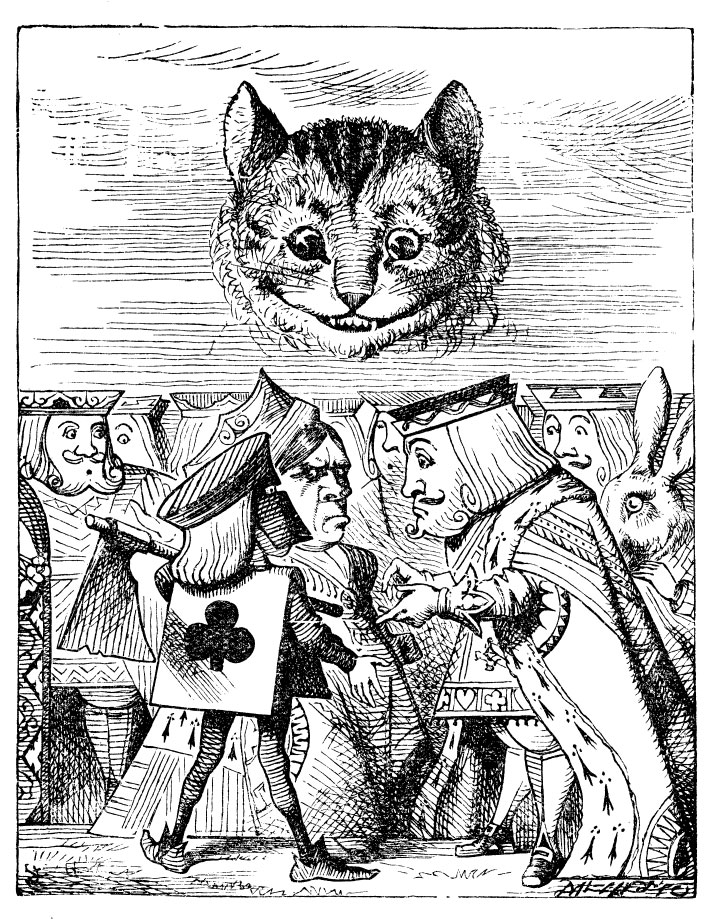
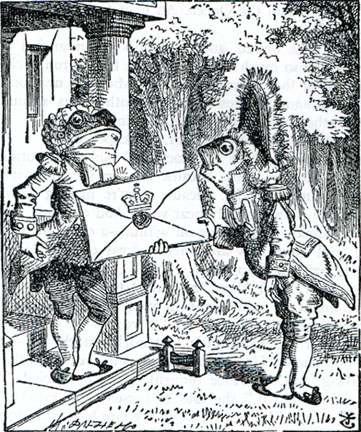 If so, in Wonderland the White Rabbit is passion, the Mouse is action, the Dodo and his Caucus Race are state, the White Rabbit’s House is position, the Caterpillar is time, the Cheshire Cat is place, the Duchess is relations, the Mad Hatter’s Tea Party is quality, the Queen of Hearts is quantity, and and the King of Hearts is substance. In the following sequel, Through the Looking Glass, corresponding chapter by chapter numerically with Wonderland, the Black Kitten is passion, the Red Queen is action, the Train is state, Tweedle Dum and Dee are position, the White Queen is time, the Sheep is place, Humpty Dumpty is relations, the Lion and Unicorn are quality, the White Knight is quantity, and the Queens’ banquet is substance. Consider how the text makes sense in light of the reverser order of Aristotle’s ten categories, first through the course of Wonderland and what this could teach Alice, and then mirrored and balanced in the sequel.
In the first chapter of Wonderland, Alice is bored, falls asleep, and dreams of the first character, the White Rabbit, who is passionate, upset and late to meet his superiors, and Alice follows him down the Rabbit Hole without a thought of how to get out, blindly following her passion. She falls down into a banquet hall, and sees a golden key on a glass table with three legs that fits a door to a beautiful garden, but she is either too big to get through the door or to small to reach the key. As a child, Alice is too passionate and extreme one way and then the other to grasp the golden key, the balance between extremes Aristotle teaches as central to his ethics, what some call the Golden Mean, which includes balance between ourselves and others, taking the smaller individual perspective of ourselves and the larger social perspective of others.
 Alice does not solve this problem now, but returns and solves it after she has spoken to Time, which the Hatter thinks Alice hasn’t. Time, the Caterpillar, teaches Alice patience, to tolerate time and change in ourselves and others, and gives Alice the mushroom after she shows him she can be patient which allows her to change and balance between the smaller and larger positions, which gets her the key, out the door and into the garden. Unfortunately, before conversing with the Caterpillar, Alice is a child who hasn’t yet learned the lesson of patience and tolerance over the course of time through discourse with others, much like the Hare and Hatter are rude and don’t plan well for the future, as Time refuses to move for them.
In the hall, following the passion of the White Rabbit, Alice cries and creates a Pool of Tears that sweeps her out of the enclosed hall and into an open ocean of emotion, which ends the first chapter. The Mouse, swimming in the pool and then away from Alice, is action, reacting to Alice’s passion for her cat, which shows she still lacks the perspective of others and balance. Alice also acts and reacts, swimming after the Mouse, blindly acting without knowing where either is going. Then she leads a multitude of animals ashore, a result of her action and leadership in a steady but stupid state, which ends the second chapter and introduces us to the Dodo.
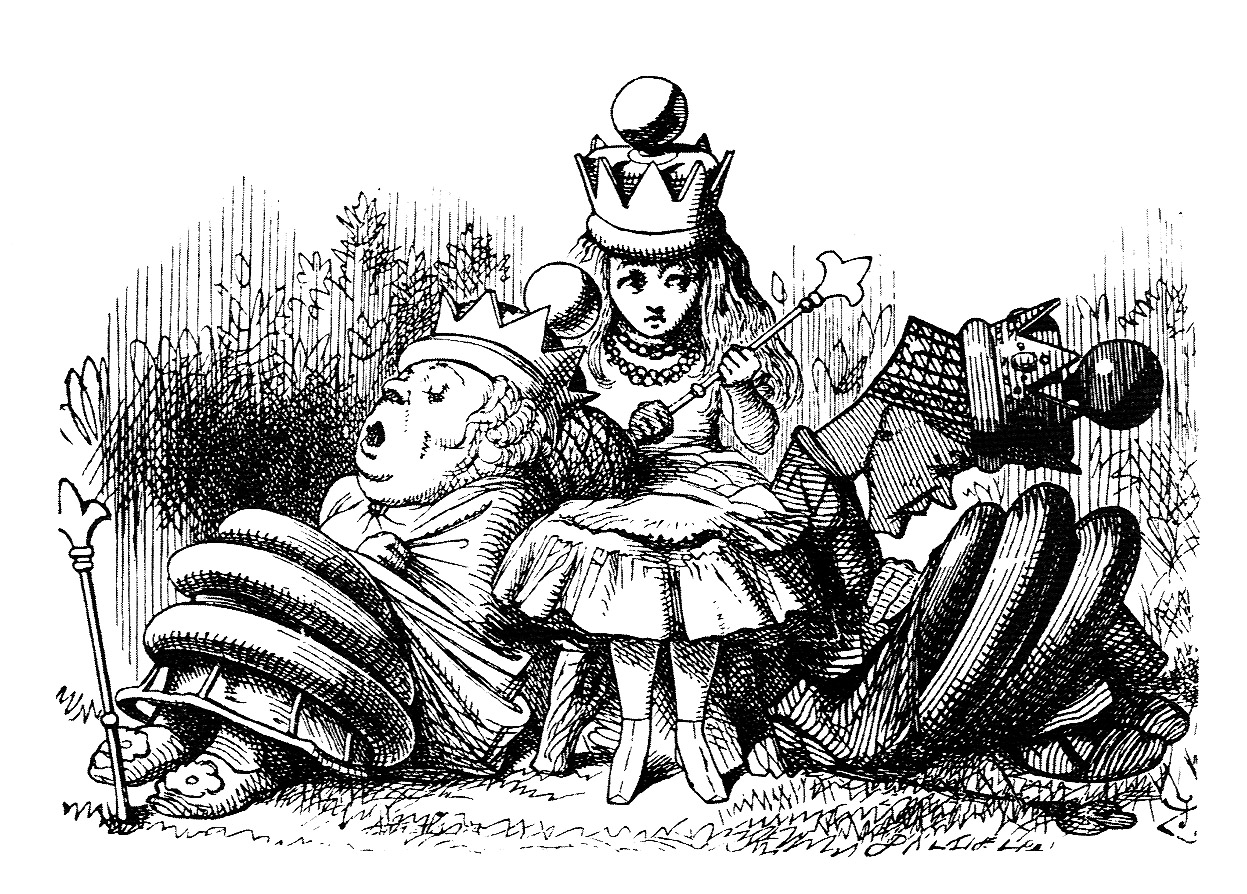
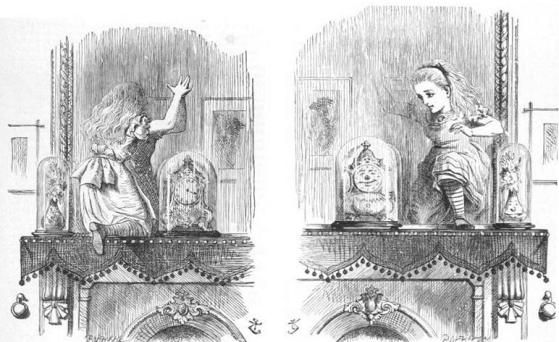 I believe Lewis Carroll used the categories of Aristotle backwards, as if seen in a mirror, to plot out and order the events of Alice’s Adventures In Wonderland and Through The Looking Glass. In Aristotle’s Categories, which Carroll knew well as the first of Aristotle’s works on logic, Aristotle lists the ten types of things we can say about things as substance, quantity, quality, relations, place, time, position, state, action and passion. In Carroll’s mirror-image order, these are passion, action, state, position, time, place, relations, quality, quantity, and substance.
 In Wonderland, the White Rabbit is passion, the Mouse is action, the Dodo and his Caucus Race are the state, the White Rabbit’s House is position, the Caterpillar is time, the Cheshire Cat is place, the Duchess is relations, the Mad Hatter’s Tea Party is quality, the Queen of Hearts is quantity, and the King of Hearts is substance. Through the Looking Glass, corresponding exactly chapter by chapter with Wonderland, as if in a mirror, the Black Kitten is passion, the Red Queen is action, the Train is the state, Tweedle Dum and Dee are position, the White Queen is time, the Sheep is place, Humpty Dumpty is relations, the Lion and Unicorn are quality, the White Knight is quantity, and the Queens’ banquet is substance.
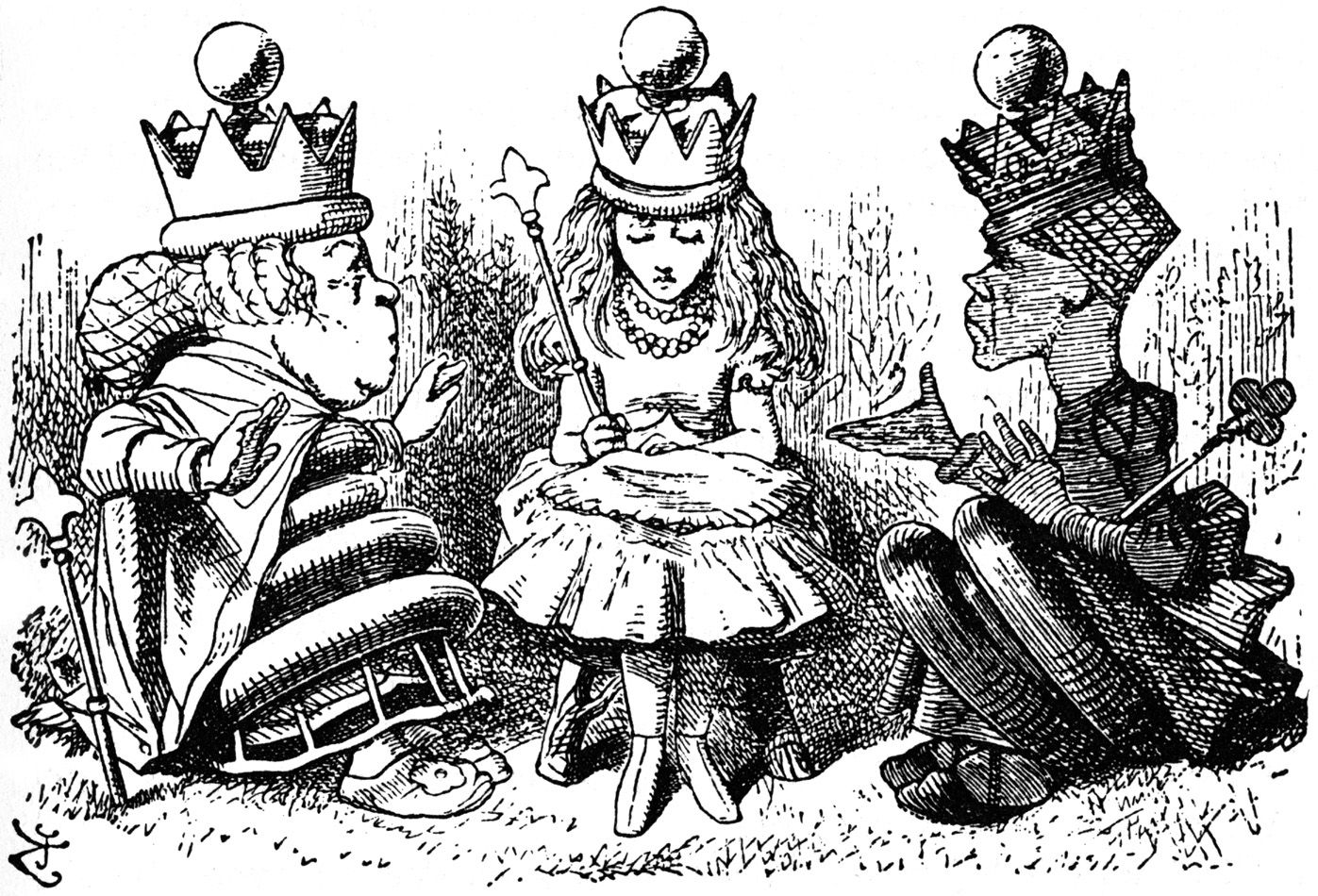 Some have said Wonderland and Through the Looking Glass are works of nonsense, meant to amuse more than educate. Carroll designed both books to illustrate forms of logic with emotional and unreasonable characters, memorable illustrations and bad examples for Alice to learn and remember well. I have used these to teach students Aristotle and logic, and they work for well. Carroll inverts many things between the two books, but he kept the order of the categories consistent. The lesson of both books is also the overall lesson of Aristotle’s Ethics, balance, avoiding extremes on either side and learning with patience over time and by position between places to make good choices for ourselves and others.
 There are many more lessons of Aristotle and others hidden in the works, but these are the overall structure and purpose. As Carroll told Alice, we should not go anywhere or do anything without a proper porpoise.
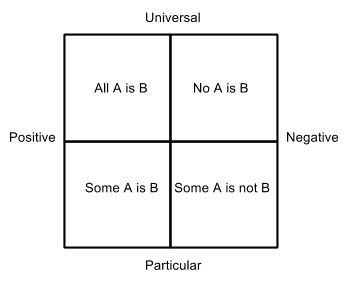
The next logic lesson from Aristotle which can be found that is hidden but central to both of Alice’s adventures is royal characters of the court, the greater pieces of the game and plot, serve as Aristotle’s four types of assertions and corresponding perfect forms of the syllogism, fundamental to Aristotle’s Prior Analytics, well known by Carroll as the second book of Aristotle’s logic, and to many as the four corners of the Square of Opposition.
 In Wonderland, the White Rabbit is positive and particular, Some A is B, the Duchess is negative and particular, Some A isn’t B, the Queen of Hearts is negative and universal, No A is B, and the King of Hearts is positive and universal, All A is B. In the Looking Glass, the Red Queen is negative and universal, No A is B, like the Queen of Hearts of Wonderland, the Red King is negative and particular, the White Queen is positive and universal, and the White King is positive and particular, like the White Knight, and like the White Rabbit, in the beginning of Wonderland.
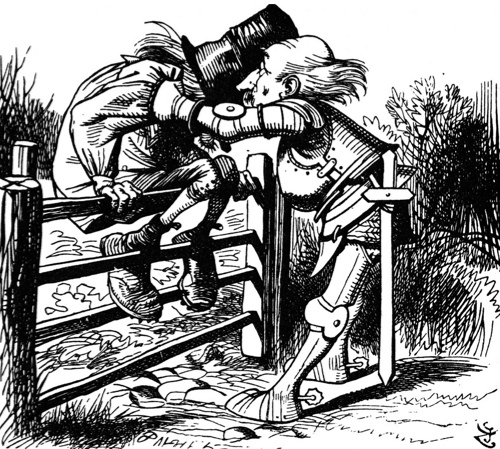 The Looking Glass shows what Aristotle calls sub-alternation twice, with each particular king following his universal queen. If we know No A is B, then we also know and later meet Some A isn’t B, the Red Queen leading to the Red King, and if we know All A is B, then we also know and later meet Some A is B, the White Queen leading to the White King, and later White Knight.
 Syllogistically, in the Looking Glass, the White Queen, inclusively open like a child, is the universal positive (All, All, All), the Red Queen is the universal negative (All, None, None), the White King is the particular positive (Some, All, Some) and the Red King is the particular negative (Some, None, Some-Not).
In the end, Alice sits as an inclusive-exclusive OR between All and None, as the one who must decide for herself, with her powers of logic and reason, some and some not like an adult between the extremes, as Aristotle advises us in ethics. There are countless examples of syllogistic reasoning in both texts, but here are central examples that show each royal chess piece as an Aristotelian corner. Aristotle starts with the Positive Universal, so Carroll starts with the opposite, not Negative Particular, but Negative Universal, the Red Queen, continuing much as if at the end of Wonderland, with the Queen of Hearts screaming for executions.
CELARENT, the Negative Universal Syllogism: If All A is B, and No B is C, then No A is C. If All ways are mine, as the Red Queen says, and None of what’s mine is yours, as the Duchess moralizes, then none of these ways are yours, is what the Red Queen means but doesn’t say, which we understand and infer quite syllogistically from what is given in her words. As a Venn diagram, if A is entirely B, and no B is C, then no A can be C.
FERIO, the Negative Particular Syllogism: If Some A is B, and No B is C, then Some A is not C. If all things are dreams, as Tweedle Dum and Tweedle Dee tell Alice, and some dreams are untrue or not ours alone, then all things are somewhat untrue, and somewhat aren’t ours alone, which is what Tweedle Dum, Dee and the Red King dreaming silently imply, but don’t say. As a Venn diagram, if some A is B and no B is C then some of A is C. As Aristotle says, if we have only some and no all or none, we can’t draw syllogistic judgements completely, leaving us with only a relative, somewhat satisfying conclusion, just as the Red King silently dreams and says nothing to Alice after she happily dances around hand in hand with both twin brothers.
 BARBARA, the Positive Universal Syllogism: If All A is B, and All B is C, then All A is C. If all things are possible to think if you Shut your eyes and try very hard, as the White Queen suggests to Alice, and if all impossible things are things indeed, even if they, unicorns and we are all quite mental, then Alice can think six or more impossible things before breakfast if she shuts her eyes, imagines, and tries very hard, as the White Queen implies but doesn’t say directly, meaning what she doesn’t say syllogistically. In Venn diagram form, if A is entirely B, and B is similarly C, then A must also be C.
DARII, the Positive Particular Syllogism: If Some A is B, and All B is C, then Some A is C. If the White King says he sent almost all his horses along with his men, but not two of them who are needed in the game later, and if Alice has met all the thousands that were sent, 4,207 precisely who pass Alice on her way, then Alice has met some but not all of the horses, namely the Red and White Knights who stand between Alice and the final square where she becomes a queen. As a Venn diagram, if some A is B and all B is C then some A must be C.


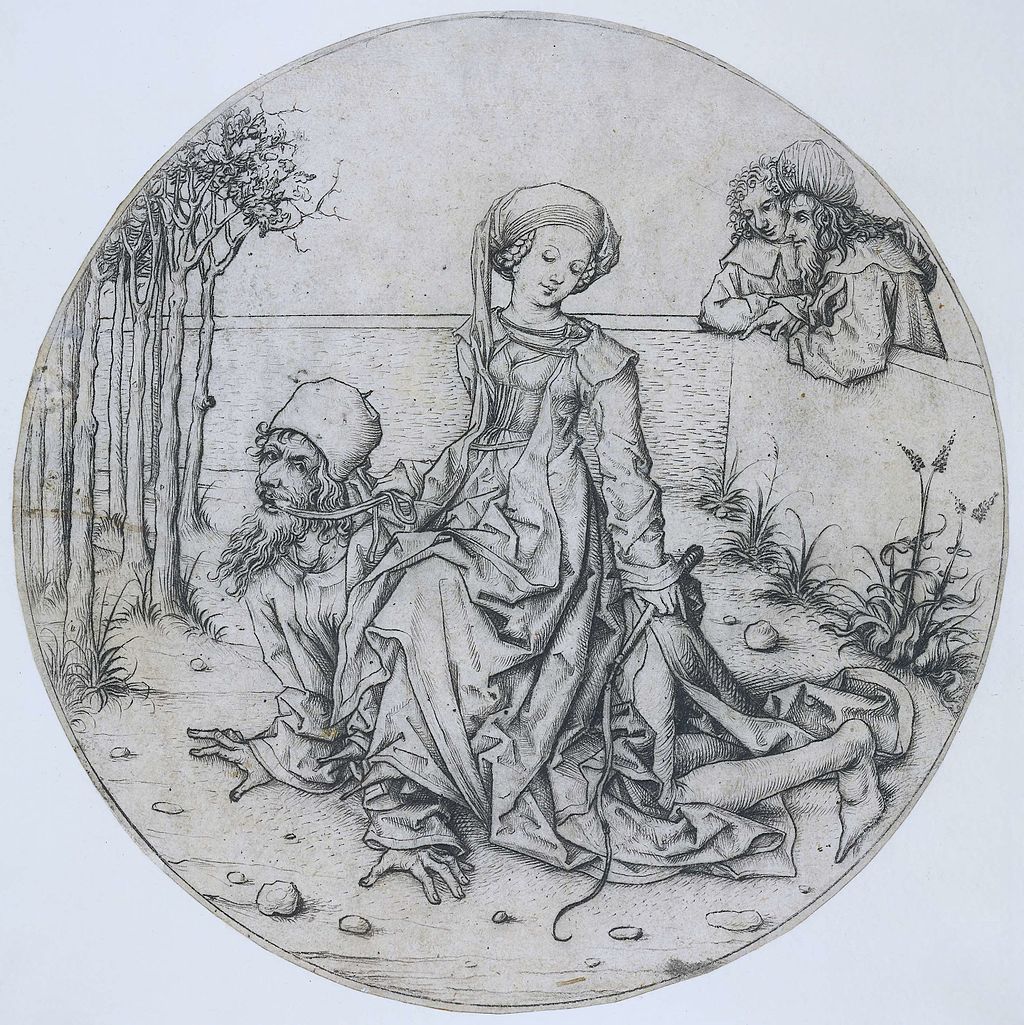
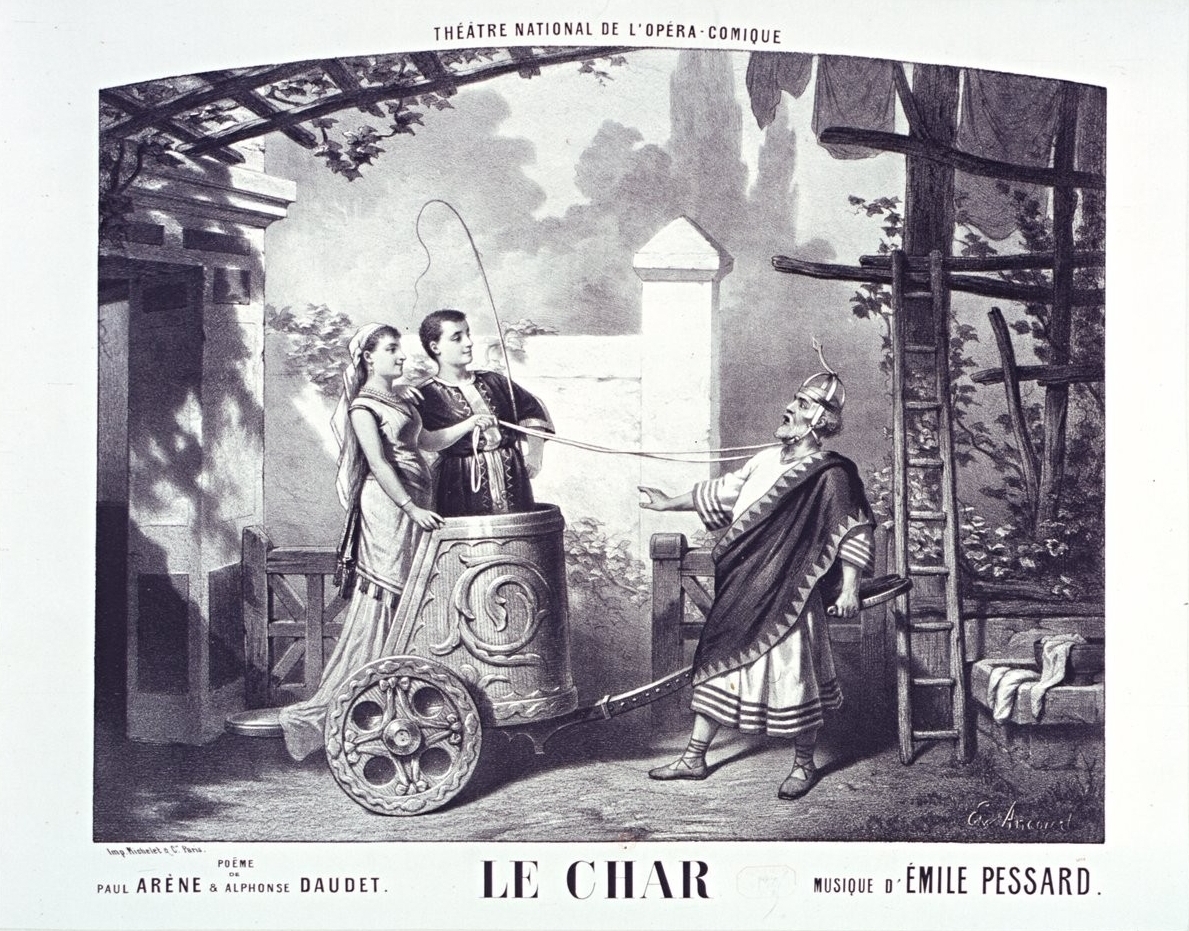
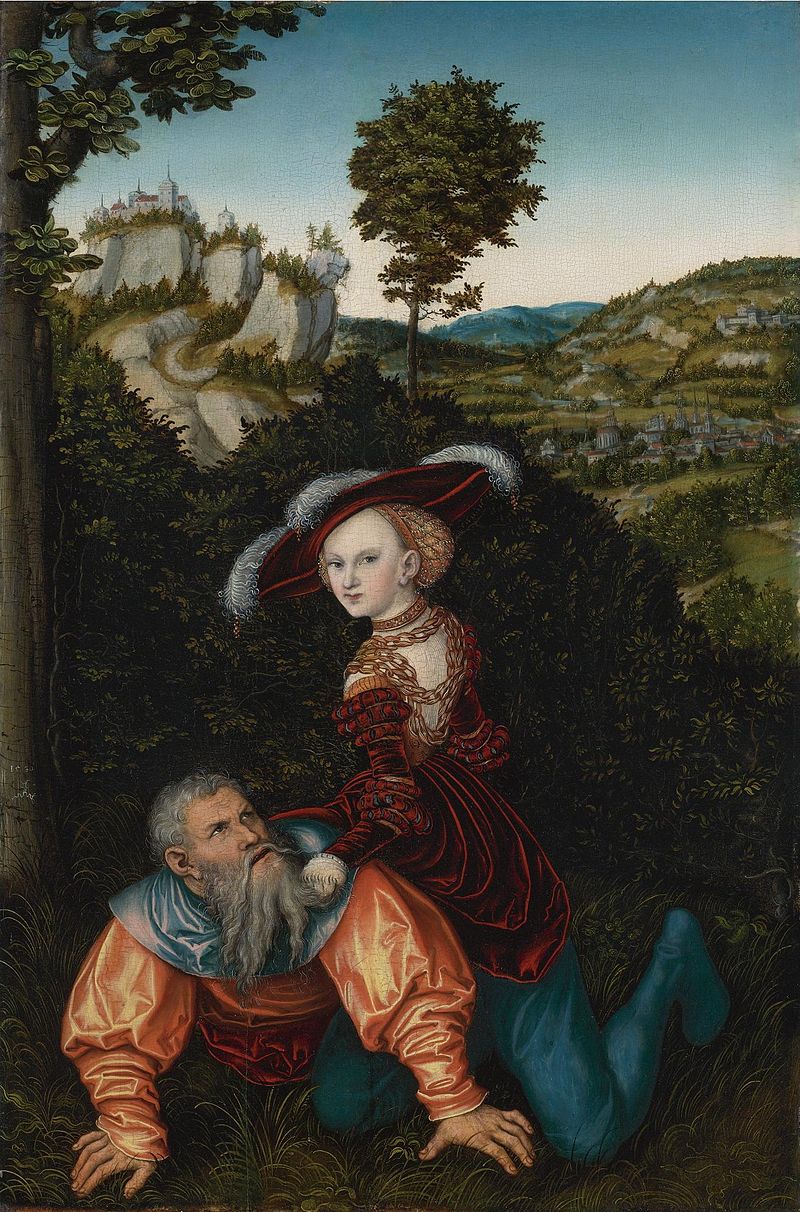 In the 1400s and 1500s the story of Phyllis riding Aristotle was popular in art and literature in France and Germany, illustrated by artists and associated with stories from the Bible, Greeks and Romans warning men about the dangers of giving women power over them, known collectively as the Power of Women tales, Weibermacht in German. The story about Aristotle first appears in the early 1200s in the sermon of Jacques de Vitry, who ridiculed Aristotle, and in a court poem Le Lai d’Aristote by Henri d’Andely, praising love as all powerful, superior to reason. Maurice Delbouille argued that there are glaring similarities to the earlier Arabic story of Al-Jahiz of the 800s, The Vizier Saddled & Bridled. The story seems to have nothing to do with the life of Aristotle or ancient times, told centuries after Aristotle was long dead.
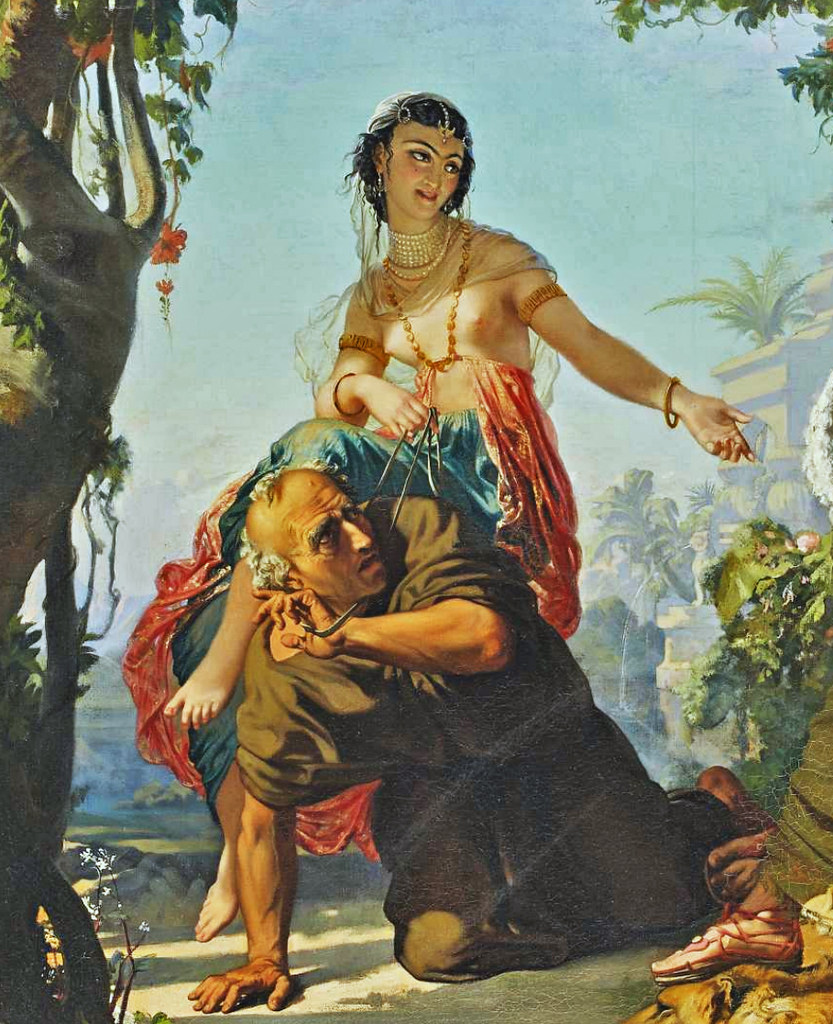 The basic story is that the wise elder Aristotle scolds his young student Alexander for ignoring his studies and state for his lover, and then the lover, an unnamed Indian woman or Phyllis, servant of the Greek Queen, takes revenge by seducing Aristotle, demanding he let her ride him like a horse to have her, and then shows this to Alexander. Aristotle admits that love conquers all, or flees in shame to another country where he ponders the evils of women and passion. Either way, Aristotle warns Alexander that his own failure serves as the perfect example of how dangerous women are to all men, particularly the young and the powerful.
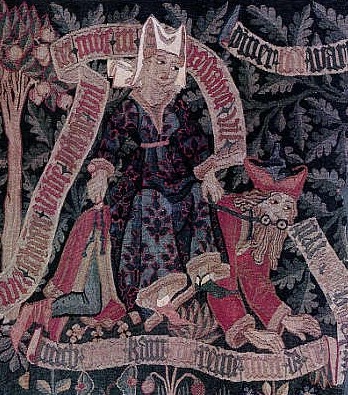 The image of Aristotle ridden by Phyllis is found in art, architecture, tapestries, furniture and as a metaphor in sermons of the time. Just as Adam was deceived by Eve as the first man, and Samson was bested by Delilah, even though he was the strongest of men, Aristotle was bested by Phyllis even though he was the wisest of men, warning strong and wise men not to underestimate the dangers of women, passion and seduction. Sometimes the images of Samson and the lion, not Delilah, are paired with Phyllis and Aristotle, comparing seduction to consumption, and sex to death. The popular use of the image in items shared by married couples suggests it was not just a serious warning to men but also a joke between men and women that women can or do have power over men in some ways, particularly in the home, something psychologists and sociologists have argued about.
 Thought Itself