Search

Thought Itself

The History of Philosophy, Logic & The Mind with Eric Gerlach

Tag

Philosophy

How Can We Try Not To Try? The Daoist Paradox of Wu-Wei

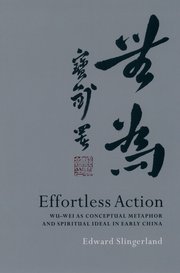
Effortless Action SlingerlandIn his book Effortless Action, Edward Slingerland delves into a deep paradox found in the work of ancient Chinese philosophers.  Wu-wei, which can be translated as either non-action or effortless action, is a state of freedom, flexibility and spontaneity acquired through the practice of living a good life.  It is identified with life and the cosmos, and can be called the skill of living well, the skill of all skills.

While it can be found once in the Analects of Confucius and then later in the Confucian works of Mencius and Xunzi, it is most prominent in the Daoist works of Laozi and Zhuangzi.  Some philosophers, such as the Daoists, say that it is our original state, that which we had before we were born and early as children.  Others, such as Xunzi, say that it is opposite our original state, which we did not have at all when we were immature, and is only acquired through study and practice.

This presents us with a paradox: How can we try not to try?

mind reason and being-in-the-world dreyfus mcdowellHeidegger was familiar with the works of the Daoists, and it is possible to answer this paradox in a Heideggerian way, relevant to the Dreyfus-McDowell debate about the interrelation of thought and action.  When we are first performing an action, we must think as we act and are clumsy in acting, but after we acquire a skill it becomes second nature and does not require the effort of thinking or being clumsy.  I discussed this in a previous post about Chuck Knoblauch over-thinking while throwing to first base.  Zhuangzi, my favorite Chinese philosopher, illustrates this in the story of Butcher Ding, who learns over the years to trust his actions without thinking and impresses the emperor.
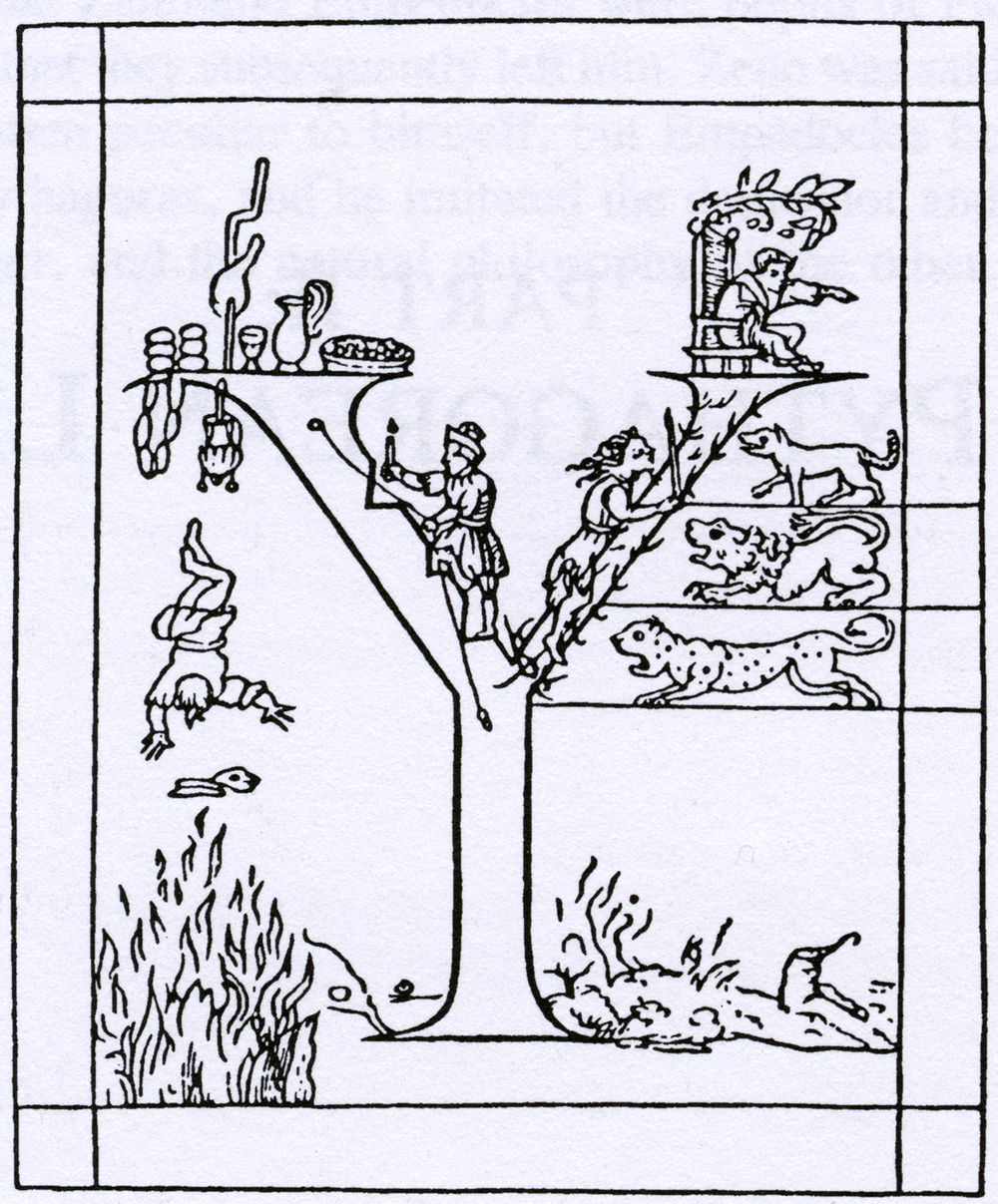
pythagorean YIf one practices living life well, at first it is difficult, but after good habits become ingrained it becomes easy and effortless.  Thus, one can become effortless through effort over time, and the paradox is resolved.  This is similar to the forking paths of Pythagoras, the ancient Greek philosopher who taught that the left-hand path of pleasure is easy but it leads to destruction, while the right-hand path of effort is hard but it leads to wisdom, happiness and tranquility.

The problem is that bad habits are as easy, if not easier, to obtain as good habits, and so we must make the effort to choose what will become effortless.

Does Chuck Knoblauch Exist When He Throws To First?

mind reason and being-in-the-world dreyfus mcdowellLately, I have been studying the connections between the early work of Heidegger and the later work of Wittgenstein.  One of the most fascinating issues involved is the ordinary way that we act when we are “in the flow”, conscious of an action but not self-conscious or critically thinking.  How much must we conceptualize ourselves or our actions in order to act?  This is the issue debated between Hubert L. Dreyfus, who taught me Heidegger at Berkeley, John McDowell and others in the book Mind, Reason, and Being-in-the-World (2013).

chuck knoblauch throws to firstOne example featured in the debate is Chuck Knoblauch, a famed second-baseman who began to have problems throwing to first to get runners out because he was over-thinking his throws.  As Lee Braver points out, there seems to be an antagonistic relationship between conceptual thought and skillful action, such that thinking can interrupt action.

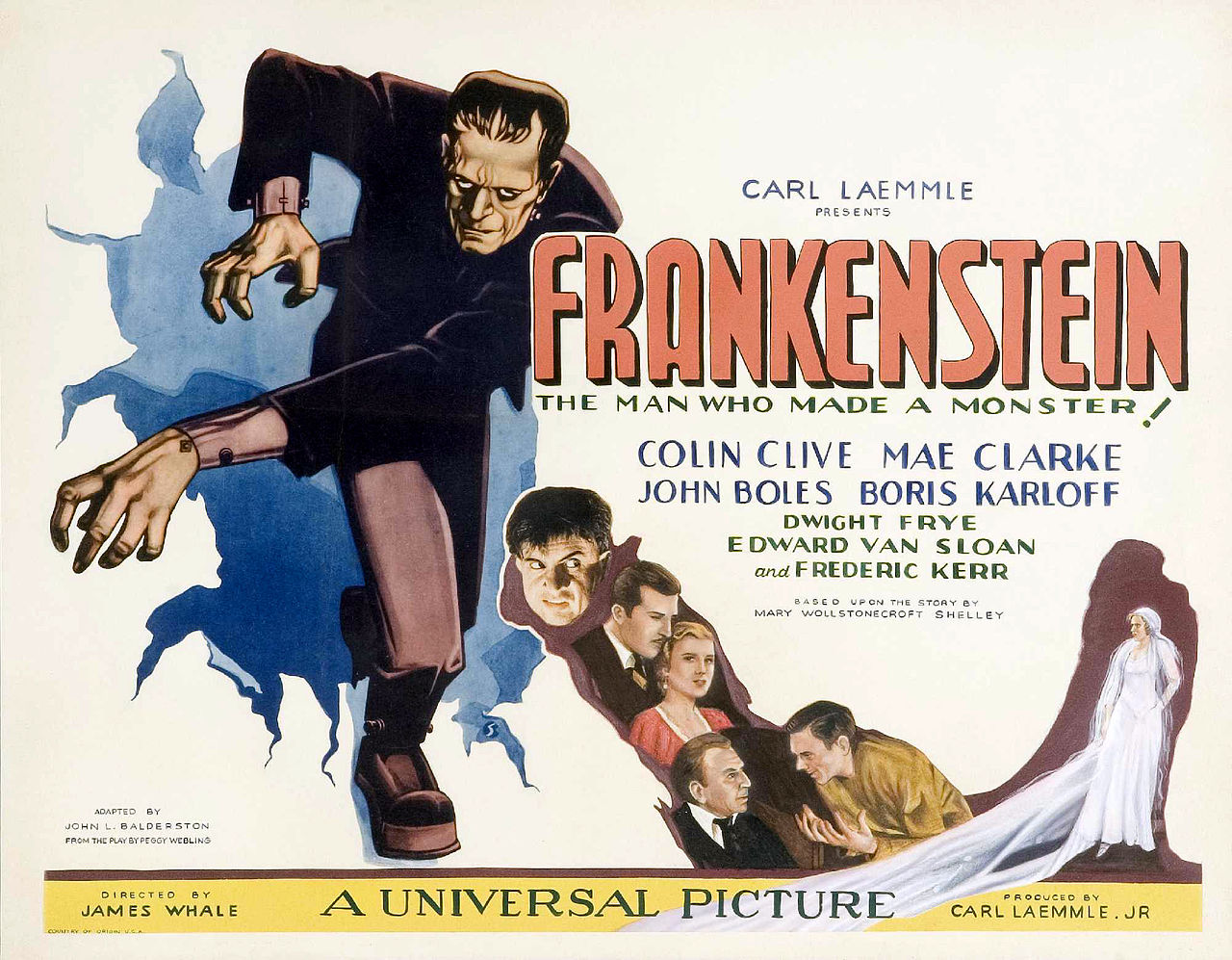
Frankenstein vintage movie posterIn his book Groundless Grounds (2012), Braver says that if we think about walking as we walk, we walk like Frankenstein.  Zhuangzi, my favorite Chinese philosopher and the second patriarch of Daoism, said that if the centipede stops to figure out how he coordinates all of its legs, it would fall all over itself.  That said, how much is thought or conceptions involved when we are consciously acting but “in the flow”?

Café_de_FloreDreyfus, following Heidegger, Sartre and Merleau-Ponty, argues that in absorbed action, we do not have a conception of ourselves or reasons for why we are acting.  Sartre said that when he runs to catch the streetcar, there is no ego.  We could also say that when Sartre is focused entirely on catching the streetcar, he also is not thinking of reasons as to why he is catching it, such as getting to Cafe de Flore to sip espresso and chain smoke.  Merleau-Ponty, friend of Sartre, said that when we are absorbed we act in a “field of forces”, reacting to threats and opportunities without thought.

Streetcar new orleansAgainst Dreyfus and very much in accord with Kant, McDowell argues that for an act to be intentional, it must be done consciously, and this requires that it be conceptual.  McDowell would say that Sartre must conceptualize himself, the streetcar, and that his purpose is to catch it in order for his dashing towards it to be an intentional act, different from the way one’s leg jerks when we are struck in the knee by a doctor.  The question is, if Sartre sees the streetcar as an opportunity, or Knoblauch sees the runner as a threat, how much must they conceive of things in addition to perceiving them?  It is difficult, and hence the Dreyfus-McDowell debate, because our perceptions and conceptions are so intertwined in so many complex ways.

Prince of the Magicians movie posterLee Braver has offered what I think is a brilliant architectural metaphor that could reframe the debate, leading to new insights and solutions. In his later work, Wittgenstein presented philosophy and math as extensions of embodied physical action.  Heidegger wants us to see that we do philosophy like we use a hammer, as we respond intuitively and immediately to words as we do to arguments.  McDowell says that all is conceptual, which Dreyfus criticizes as upper floor abstract aristocrats all the way down.  Dreyfus says there is a basement beneath the upper floors where absorbed servants toil, but the two are disconnected.  Braver says that we can go with a third plan, that it is basement servants all the way up (as opposed to turtles all the way down).  We get rid of the class distinction between the aristocrats on the upper floor and the servants in the basement.  This gets rid of Dreyfus’ gap but reverses the direction of McDowell.

What do you think?  In what ways are action and thought interrelated or opposed to each other?

Buddha & Descartes, Thought & Thinker

The opening lines of the Dhammapada, the collected sayings of the Buddha, read:

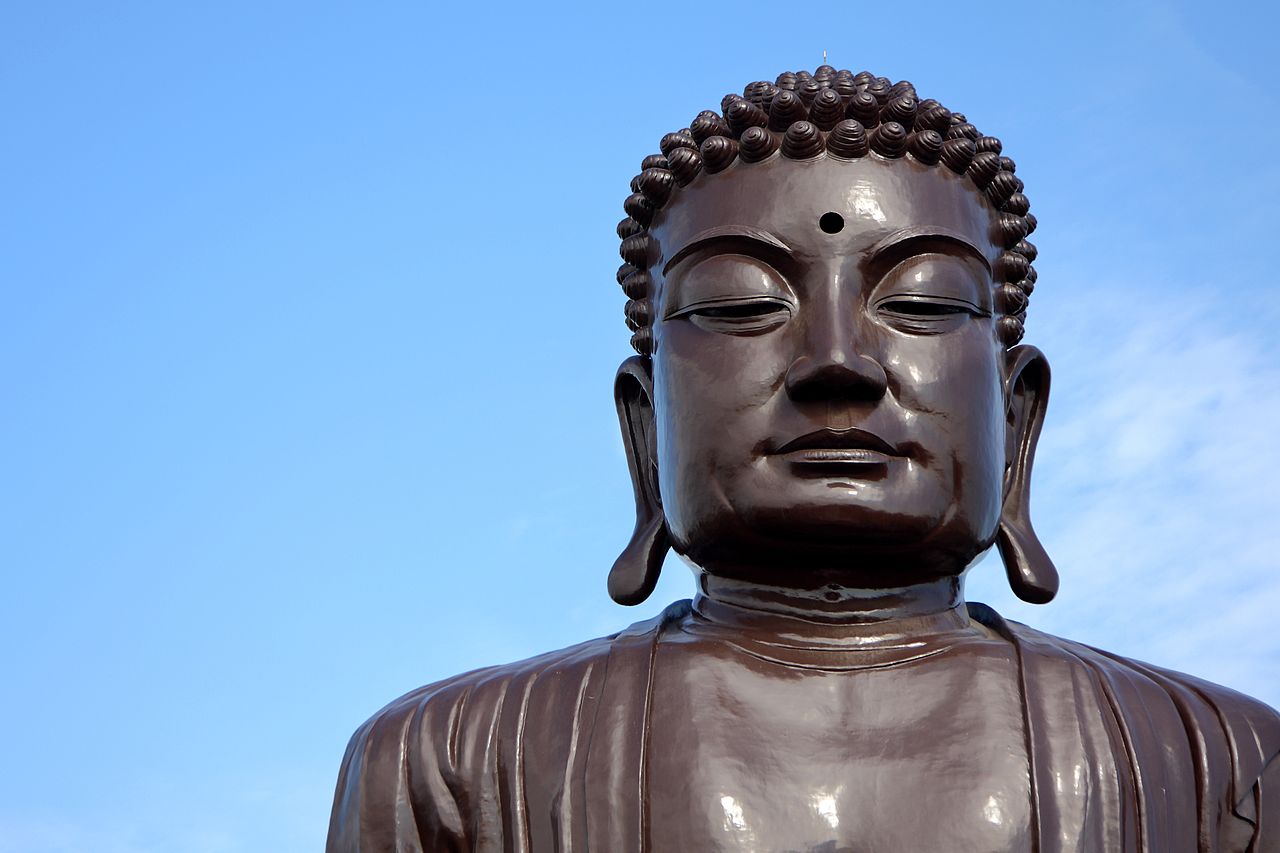
We are what we think.  All that we are arisBuddha Statue Taiwanes with our thoughts.  With our thoughts we make the world.  Speak or act with an impure mind and trouble will follow you as the wheel follows the ox that draws the cart… Speak or act with a pure mind and happiness will follow you as your shadow, unshakable.

Speaking and acting are the two ways one uses one’s mind to draw trouble or happiness from the world.  This fits with Merleau-Ponty and Wittgenstein, who said that when we speak, our words are our thoughts, with no separation between speaking and thinking.  The same applies to acts.  Perhaps all thinking is rooted in speaking and acting.  Perhaps picturing something in the head is rooted in the experience of looking, moving one’s eyes, head, neck and body such that a thing comes into view.

Descartes statueDescartes famously wrote, “I think, therefore I am”.  Both Buddha and Descartes reason that if there is thinking, then there is a thinker, but they see this relationship in opposite ways.

For Buddha, the thinking is the coming into existence of the thinker, such that there is no thinker without thought making it so.  The thinking causes the thinker to be a particular thing.

For Descartes, the thinking is evidence of the thinker, leading to the conclusion that there exists a thinker prior to and independent of the thinking.

The Dying Murderer

XIR24990One of my students in Greek Philosophy, discussing the Stoic ideal of accepting fate, said that when she was growing up she heard a story about a boy whose entire family was murdered.  After spending his life searching for the murderer, the boy, now a man, found the murderer was about to die.

The murderer begged the man to kill him and end his suffering, but the man refused to punish the murderer.  Now the man wondered why he had spent his life trying to kill his family’s murderer when time was already going to do it for him.

The Groundless Grounds of Wittgenstein & Heidegger

Groundless Gounds A Study of Wittgenstein and Heidegger Lee BraverA friend of mine recently brought Lee Braver’s book Groundless Grounds: A Study of Wittgenstein and Heidegger (2012) to my attention, and I must say, it is so far an incredible book.  In the introduction, Braver sets out the overall frame of the book, which should be of some interest to anyone concerned with the similarities of the early work of Heidegger and the later work of Wittgenstein:

Both Heidegger and Wittgenstein argue that philosophy that suspends our activity in the world, taking a disengaged theoretical stance, is a problem (Ch 1).  Both argue that this problematic view comes about by conceiving of things as changeless, self-contained objects (Ch 2).  For Heidegger, this is the “present-at-hand”.  For W, it is atomism and private language.  Such bare inert objects do not give us a proper and full view of human life and meaning.  Both argue that we need to see things as holistic and interdependent (Ch 3).  While reality has been primarily understood in terms of knowledge, thought rests on non-rational and unjustified socialization, which includes our spontaneous and responsive activity (Ch 4).  This new conception of thought has particular ramifications, calling into question the Law of Non-Contradiction (Wittgenstein) and the Principle of Reason (Heidegger) (Ch 5).  Our lack of justification in thought does not make thinking worthless.  Rather, it shows us what we take as “groundless grounds”, what we rely upon even if it is always somewhat and in some ways unreliable.

Reality Is Very Imaginary

How imaginary is reality? Our shared reality is more thought than it is seen or touched, more conceived than it is perceived. While many confuse the imaginary with the unreal, thinking that imagination is merely fiction, it is fiction that is merely imaginary. Reality, unlike fiction, is both imaginary AND real.

Imagine we are out walking and see a bush move suspiciously. It could be a tiger, putting us both in danger, or it could be our friend who enjoys foraging for berries and screwing with people. Both are real possibilities. The reality we share includes possibilities and projections, which we imagine together.

It is wise to believe that tigers are dangerous, in spite of the fact that no one has seen or will ever see all tigers. When we think about tigers, we are imagining all tigers as a group, bringing them together as a concept. While each of us has a slightly different experience and understanding of tigers, our conceptions largely overlap. We imagine that there could be tigers that are tame and harmless, but also imagine that tigers are generally dangerous.

It is useful for us to share concepts, as we imagine that they correspond to reality, but we must imagine the correspondence. Reality as a whole, beyond our perceptions, is itself a concept. We can perceive particular things at particular times and in particular places that correspond to our concepts, but we must conceive that our concepts correspond to reality as a whole, and to things in general. Our reality is always far beyond what we each can see.

What about the things we can see? Because we have eyes in the front of our heads, we see half of what surrounds us with both eyes open, and we touch and hear very little of what we see. We imagine everything outside this, what is behind us, above us, beneath us, and what is hidden from view. If we move closer to things, we see more detail, and if we move farther away, we see more of the situation. We must imagine everything outside this scope. We must even imagine ourselves, using a self concept to be self conscious, seeing everything other than our hands only occasionally in reflections.

The past, the future, and the majority of the present, all of which we share, is almost entirely imaginary and conceptual, a representation that we share in consensus with little debate. All of this, we imagine, is very useful. All of this, we imagine, is very real. The question is not whether or not our reality is imaginary, but how useful our imaginations are. What we imagine can limit our reality, but it can also be used to change and expand our reality, making even the impossible real.

Preferring Certainty

Arabic AristotleOne of the many strange things encountered in studying Aristotle’s work on logic is the ability to derive the truth of a particular statement (some or some not) from a universal statement (all or none).  If we know that all cows have horns, we also know that some cows have horns, and if we know that no cows play the accordion, we also know that some cows do not play the accordion.

While we know that this is technically true, many a student of logic becomes lost here, as it sounds odd to make a statement only about some when we could make a statement about all.  If I know that cows never play the accordion, it almost sounds like a deliberate misrepresentation to say that some cows do not.

Black Swan

However, if we are strictly empirical, and investigating things with the idea that there can always be counter examples we have yet to encounter, we can only say that some cows, those we have encountered, cannot play the accordion.  Aristotle himself believed that all swans are white and all crows are black, and used these as examples of universal statements, but he was wrong, as both black swans and white crows existed at the time in Australia.

White CrowWhy, then, do we feel more comfortable making the universal claim then the particular one?  The particular statement, only about some, is more cautious than the universal statement, about all.  When we make universal claims, we are stating with confidence that there are, effectively, no counter examples, much as one could say, in Aristotle’s world, there effectively were no black swans or white crows, as Aristotle’s world did not include Australia.  When we are skeptical and doubt we are cautious, only feeling safe making particular claims, but when we are dogmatic and believe we are confident, feeling safe in making universal claims.  This is why making a cautious particular claim about some sounds odd when we have already assumed the universal claim about all to be true.

WISE UP: Zhuangzi’s That Has a This

WISE UP: Marcus Aurelius Says Don’t Hate Jerks

Blog at WordPress.com.

Up ↑