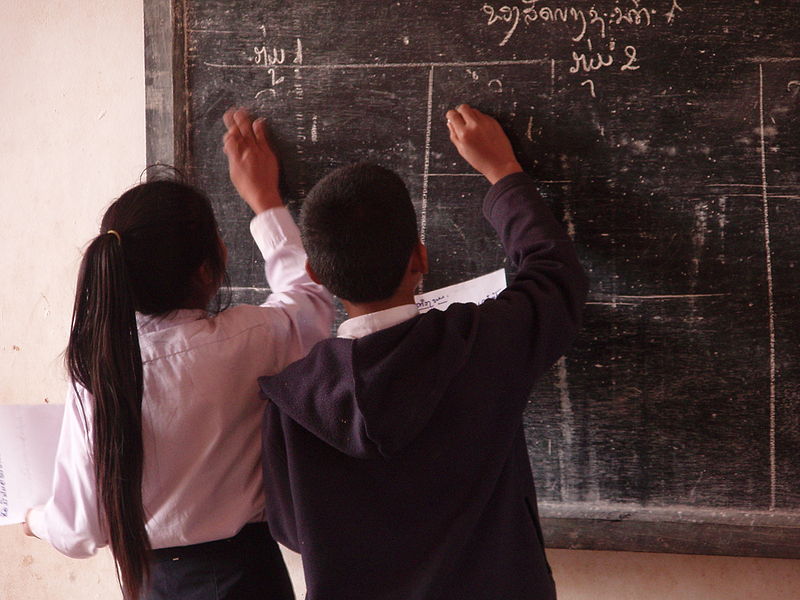
 I have been thinking lately, in lieu of conversations with friends, about where thinking starts and stops, the grounds and the ends, with the means in the middle. Just as Lee Braver says in his book Groundless Grounds, we do not examine the grounds from which we start as we use them, giving them a kind of nothingness underneath rather than turtles all the way down in an infinite regress. Wittgenstein’s child at the blackboard is a perfect illustration of this point. Children learn math as a regular practice, not as a complete and coherent set of rules. Rules are only called in when there are misunderstandings in following the regular practice, just as road signs are employed when one does not know the way to San Jose. If we need rules to understand things, then we need rules to understand the rules, and so on, and we have an infinite regress again, this time without turtles.
 Similarly, the mundane and meaningless has a nothingness to it for the opposite reason. Consider the things around us that are serving no purpose, which we barely notice. While we proceed from grounds towards ends, the mundane serves no ends, and thus it recedes as nothing important, bringing us nowhere and to nothing. Similarly, our ends have a nothingness to them because, in spite of giving things their importance, we do not think beyond them as to where they lead. When I think about pouring myself another cup of sweet, satisfying coffee, I am not thinking about what caffeine will do to my body, and if I am thinking about what caffeine will do to my body, I am not thinking about what significance this may have for scientific studies. One has to move in thought from one to the other, shifting grounds and ends, to put each end in sight.


 Thought Itself