Search

Thought Itself

The History of Philosophy, Logic & The Mind with Eric Gerlach

The Groundless Grounds of Wittgenstein & Heidegger

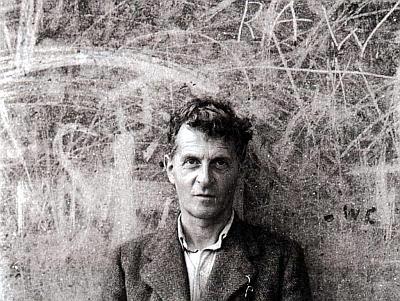
Groundless Gounds A Study of Wittgenstein and Heidegger Lee BraverA friend of mine recently brought Lee Braver’s book Groundless Grounds: A Study of Wittgenstein and Heidegger (2012) to my attention, and I must say, it is so far an incredible book.  In the introduction, Braver sets out the overall frame of the book, which should be of some interest to anyone concerned with the similarities of the early work of Heidegger and the later work of Wittgenstein:

Both Heidegger and Wittgenstein argue that philosophy that suspends our activity in the world, taking a disengaged theoretical stance, is a problem (Ch 1).  Both argue that this problematic view comes about by conceiving of things as changeless, self-contained objects (Ch 2).  For Heidegger, this is the “present-at-hand”.  For W, it is atomism and private language.  Such bare inert objects do not give us a proper and full view of human life and meaning.  Both argue that we need to see things as holistic and interdependent (Ch 3).  While reality has been primarily understood in terms of knowledge, thought rests on non-rational and unjustified socialization, which includes our spontaneous and responsive activity (Ch 4).  This new conception of thought has particular ramifications, calling into question the Law of Non-Contradiction (Wittgenstein) and the Principle of Reason (Heidegger) (Ch 5).  Our lack of justification in thought does not make thinking worthless.  Rather, it shows us what we take as “groundless grounds”, what we rely upon even if it is always somewhat and in some ways unreliable.

Duck-Rabbit War

Duck Rabbit War (by Paul Noth)

Racism & Protest

ferguson missouriAs the news was unfolding about protests in Ferguson, Missouri yesterday, I was reading my Ethics students’ papers about social issues, including racism.  One of my students shared a personal story that was powerful, and I asked her if I could share it with future classes.  I am going to share it with you all as well.

civil rights imageAs a student in college years ago, she took a job at the college gym.  Her supervisor told her that if anyone came into the gym who looked like they did not belong there, she should walk over and offer them a tour, as this often discouraged trouble makers. As a black woman, this troubled her, as she had many experiences feeling unwelcome and suspect, and she asked her supervisor what qualified people as “not-belonging”.  Her supervisor told her that she would just know.  Feeling uncomfortable with this task, she opted out of the job.

protest ferguson hands up don't shootWeeks later, she returned to the gym to exercise, and a student-worker stopped her and asked her if she wanted a tour.  When she became angry, and demanded to know why she was being stopped, the worker called the campus police, and she was barred from the gym.

Her protest was seen as proof that she did not belong.

Chinese Spinning Wheel

The spinning wheel, as well as the story of Cinderella, originally comes from China.

Chinese Spinning Wheel

Map of Uncolonized Africa

Awesome Swedish artist Nikolaj Cyon created a map of Africa if it had not been colonized by Europe, upside down to reverse Eurocentric bias.  I got it from this link here.

Uncolonized Africa

Butterfly Closeup

Butterfly Closeup

I Nietzsche Now Tonight

and i nietzsche now tonight meme

It’s Turtles All The Way Down

OLYMPUS DIGITAL CAMERA“It’s turtles all the way down!”, according to legend, is what an old lady said to a physicist after hearing him lecture on cosmology, refusing to give up her traditional belief that the world rested on a turtle, which rested on another turtle, which rested on another.  The expression has come to stand for an infinite regress.  If something relies on another thing, which relies on another thing, at what point is there a final turtle that relies on nothing?  Here we have the opposite problem: In order to halt an infinite regress, we must engage in circular reasoning and declare a final thing to be self-supported.

Wittgenstein BlackboardIn his Philosophical Investigations, Wittgenstein poses the problem of the child at the blackboard.  If a child does not understand how to do arithmetic, we can teach the child rules to show them how arithmetic is done.  However, what if the child does not understand the rules?  We could teach the child rules for understanding the rules, but this leads to an infinite regress, to a series of turtles that seems to recede from sight.  At what point does the child understand rules of the rules?  What rules require no rules to teach the child our interpretation of arithmetic, such that the child can practice it the way that we do?  The mysterious answer, Wittgenstein suggests, is that our practices do not rest on rules.  It is not language that is at the bottom of our behavior, such that we learn rules to engage in practices.  Rather, we learn practices by imitation, largely without need for words or explicit rules.  We only need rules to guide the child, who is already engaged in practice, as signposts to guide the child into correct practices rather than incorrect ones.  Language, like the turtle, is only one element in the situation, as are human judgements.  The world in which we live goes beyond the limits of language and rules.  Experience cannot be fully fleshed out in language, nor can practices be fully articulated by rules.

The Use of Nothing in Particular

We use the term nothing to mean nothing in particular, when we don’t want someone to judge a thing either this way or that way, similar to the way we say something is meaningless or nonsense.

Zen Circle Caligraphy Painting

Just as every space and absence is not perfectly empty, every thing we declare to be ‘nothing’ could be judged, but we say it is nothing when we don’t want others to judge or nothing will come from the judgement.

We use the word both genuinely and as a cover, when we think there is nothing worth judging, or when we do not want others to judge when we know they well would.  Sometimes we genuinely think a thing is unimportant, and other times we hope that others will not think that it is important, afraid that they will, like a child, asked what they are doing, who hollers back, “NOTHING!”, terrified.

zen screen lakeWhen things are unimportant, when they are “nothing”, they are neither good nor bad much at all.  When things are important, we have to judge whether they are good or bad, or both in various ways.  Most of the time we say things are nothing, we mean or hope they are unimportant.  At other times, when thinking about death or the future, the nothing that lies just beyond the horizon is important and imposing, but we cannot judge it, even if we want to.  In both cases, when nothing is important or unimportant, it is that which cannot or should not be judged, that which judgement cannot or will not grasp.

Blog at WordPress.com.

Up ↑